


Welcome to Processing, a podcast about human expression in the age of AI
Shiva Rose is one of my heroes, an incredible writer, teacher, creatrix, healer of the planet and galaxies, and fellow devotee of the divine feminine.
Appropriately, Shiva and I originally connected via writing & the Goddess Venus about 10 years ago (it’s a 2016/2026 moment!), when I wrote guest articles about Venus for her incredible blog The Local Rose.
When we opened up this session of Processing, it became so clear that the feminine is still working and weaving with us… this time bubbling up as the creative muse!
From protecting waters and the earth from the ills of AI, to Shiva’s writing process and how she connects to the muse & inspiration (hint: it’s ALL about getting off our devices and back to our own devices), to advocating for a world with more texture, beauty, and story…this episode is so rich, textured, and deep.
Hope it helps us all reflect on the kind of beautiful world we want to live in, and how we can weave beauty, artistry, and muse-infused magic wherever we go!
We explore:
The huge cost of AI when it comes to creativity and water. Shiva poses this question: “I think people have to just decide, would you rather have your life easier with chat or would you like to use 1 to 5 million gallons of water a day? “
The bizarre time we find ourselves in where people are hiring human copywriters to correct robot writers and make it all more “human”
How humans will eventually catch on, come full circle, reclaim the depth of our humanity and our spirituality and to say No to a technocratic life. A hopeful take for the last unicorns of artistry in the world.
Shiva’s Process of connecting to her muse: Hint: it happens when she’s away from screens! We also dive into the correspondences between writing, acting, and the muscle for storytelling.
The insidiously addictive nature of our devices and the spiritual/creative issues of AI… and the very polarized feeling of are we creating a new paradigm or a dystopia? (But there’s good news) And the full-circle nature of the cycle we’re in.
The rare humans and art that inspired us growing up, from a world that feels like it’s fading away — Shiva’s incredible education in cinema, and how we can inspire our youth to stay connected to a world of texture & beauty
The Goddess Venus, The Creative Muse, Mary Magdalene, Shiva’s Substack, The Waters… and ultimately how the feminine is speaking to and through us at this pivotal time.
As Shiva poignantly states at the end of our conversation: “The moral of this is disconnect from the phone, disconnect from AI, and find your inner muse.”
After this recording, Shiva wrote this beautiful piece about how she connects with her muse if you’d like to take this exploration deeper.
About Our Guest
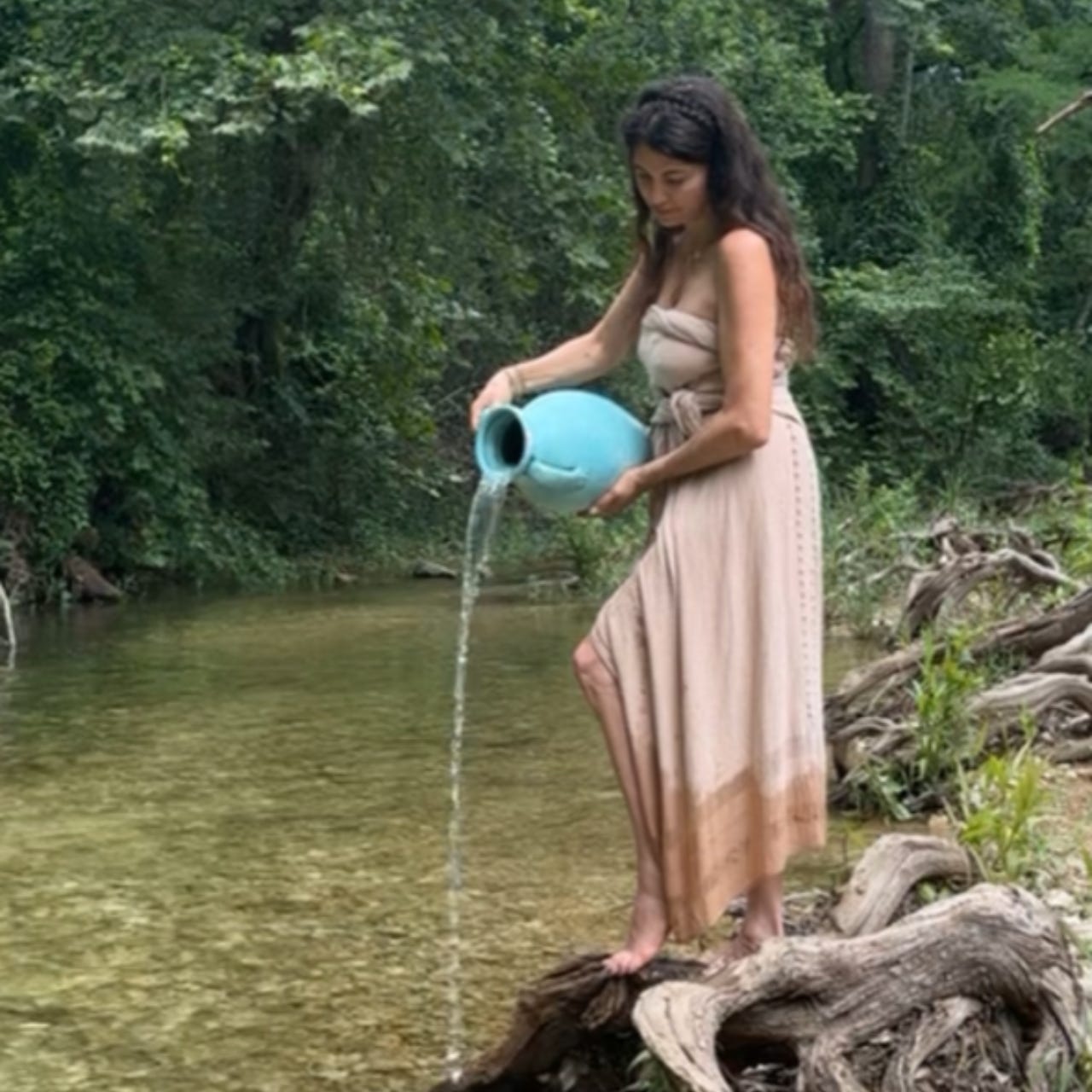
Shiva Rose is a holistic wellness expert, actress, and advocate for natural beauty. She is the author of the best-selling book Whole Beauty: Daily Rituals and Natural Recipes for Lifelong Beauty and Wellness published by Artisan Books. In addition, she has developed the non-toxic, elegant, Ayurvedic-inspired beauty line, Shiva Rose Beauty. As the founder of The Local Rose, a lifestyle blog dedicated to natural living, Shiva aims to empower women to achieve inner and outer radiance through holistic practices and natural beauty solutions.
Connect With Shiva
Shiva’s Substack: Read her life-giving writings on The House of Magdalena
Shiva’s Book: Whole Beauty: Rituals & Recipes
Shiva’s Beauty Line: Shiva Rose Beauty
Water Course: The Waterways of The Feminine Mystique
Moon Course: The Moon & You
Connect with Shiva on Instagram: Local Rose and Shiva Rose Beauty
Mentioned in this Episode, Elyssa’s Venus articles from the Local Rose ~10 years ago!
Episode Transcript for Your Reading Pleasure
Elyssa: Hi, Shiva. Hi everyone. I am so delighted and excited today. I have Shiva Rose, one of my heroes, incredible writer, teacher, creatrix, healer of the planet and galaxies, and fellow devotee of the divine feminine to be with us today for Processing.
Shiva and I have connected really via writing originally about 10 years ago, and it’s so funny with that 2026/2016 thing… seeing the full circle there.
I’m so excited to have Shiva on today because I have seen you as a voice (in the overwhelming AI culture) as someone who’s speaking up and speaking out against it. Like:
“We don’t necessarily want this. We never asked for this.”
So yeah, how are you today, Shiva?
How are you feeling about AI in this day and age?
Shiva: Well, I’m so, I mean, your introduction just, oh my goodness. I feel like, okay, my work’s done here. Thank you. Goodbye. If I can be all those things, I am, I just feel like, oh, so honored and I can retire now. Done.
Thank you for putting that forth and seeing me in that light. I mean, listen, I think ultimately our dreams are to be seen… as who we are or who we would like to be. So thank you for that.
And yes, it’s a very interesting time. My goodness. The AI, I mean, I feel sometimes like I’m just alone out here because I refuse to use chat. I refuse to use that. I refuse to use it for my substack essays. And I know many people do. I refuse to post, you know, using AI and sometimes it gets harder and harder.
Like, I’ll Google something and then I’m like, “Oh my gosh, is this, is this chat? Is this AI?” Because I’m not the savviest and I see it infiltrating in every way.
And I know there’s positives. Yes. People talk about the positives for the medical world and shortening our times researching and advances that can be made.
But we have to realize that it comes with a cost, a huge cost. For me, the two things that matter the most are our creativity, which connects us to the divine and makes us so human. And the second thing is water, which I have a course that I created called The Waterways of the Feminine Mystique, which is all about water and how we need to protect it, salvage it, restore it, honor it.
And AI uses…I mean, we, we will run out of water.
And I think people have to just decide, would you rather have your life easier with chat or would you like to use 1 to 5 million gallons of water a day?
Which is what these data centers are doing. So I think for younger people, I wanna get that information out there.
Because I don’t think they know, not to mention the jobs which are being eliminated now. So. And it’s a tough question. I’d love to see where you think, because I know we’re going that way, right? And a lot of people are like, “Well if you can’t beat ‘em, join ‘em.”
I don’t know.
I’m an Aquarius. I like to put up a fight as long as I can.
Un-AI-ifying writing & reclaiming our humanity
Elyssa: I love it. Thank you. It’s so funny because I feel like, you know… I’m a professional copywriter and my industry kind of like took ai, they embraced it early because I think they were afraid of being replaced.
And I feel like I was one of the first people who was like actively like losing work or my friends lost their jobs because they were being replaced by AI.
And I just spent… I did a degree in screenwriting in MFA at UCLA. Then I went into copywriting, falling in love with how to make an email beautiful, like a love letter. And there were people in the space doing really creative and innovative things. And I saw it as a way to create freedom in my own life.
Like, “Yes, I have these skills as a writer and I can help share people’s voices and help people express.” And so when the AI rollout happened, I just never adopted it. I was like, “I don’t need this tool.” I’ve spent most of my life writing in one mechanism or another, and I felt a lot of anger brewing under the surface.
It was funny because it took me about three years to share that I suddenly became like the only person in my space who wasn’t using AI.
And I had a friend who was like, “You need to talk about this… The thing you’re not talking about, like being the kind of last unicorn non AI writer.”
Shiva: That’s a good, that’s a good title for your next substack.
Elyssa: Yes, totally.
Shiva: but, don’t you think… like people say (because I don’t use AI) but I’ve heard that people can tell when it’s AI.
Elyssa: Oh yeah, for sure.
Shiva: It’s become…there’s little markers that show it’s AI, then it’s not as heartfelt maybe.
Elyssa: Yeah. I actually think that’s why a lot of the personal development space and the coaching space is like… and just the online industry… is not doing as well, because we’re missing people’s voices. And yeah, a lot of my work right now as a copywriter is fixing AI, which is terrible...
It’s like fixing AI copy. “un-AI-iffying” copy actually.
Shiva: It’s creating work.
Elyssa: Exactly. But a lot of times I’ve always felt like we should just go back to the drawing board, rather than have me fix email. It’s always gonna be better if I am actually using somebody’s real voice.
Iit’s funny being in that position where in some ways I’m even like a ghost writer for people… and I’ve worked on a book.
…I’m the original writing robot, I guess.
Shiva:
That is fascinating. That is fascinating. Hiring humans to correct it. Make it more soulful and heartfelt.
Wow. Now, if that’s not like the nut of where we are going, then I don’t know what is.
Cause, yes, I’ve heard that what’s gonna happen is everyone’s gonna do AI. It’s just like with the film industry, everybody’s gonna use AI. They’re going to do these films, and then they’re going to just lose steam and people are going to want to go back to like the real thing.
And it’s like —we’re going to come full circle.
And I think those of us that are evolved and smart enough can know that…
Yes, eventually it’s going to be the unicorns, the rarities…kind of like why you and your partner are so into, you know, old houses and antiques…
Those of us who have this love for real artistry and beauty gravitate towards the old world way of doing things.
I just hope this happens quick. So the cycle finishes and we’re still young enough.
Elyssa: I think that the backlash is already really happening with AI. And it’s been interesting, because I started posting about it like five or six months ago, and now I’m seeing more, a lot more… “We don’t want this. Bring us back to our humanity.”
And it’s so interesting, right?
In this age where we’re sort of being pulled between…
We’re being invited ultimately to reclaim the depth of our humanity and our spirituality and to say No to the sort of like technocratic life.
Shiva: I mean, water! We need water to survive… if that’s not enough of an awakening!
I’ve seen people, I’m sure you saw, there’s like that farmer who, who refused like billion dollars not to sell his farm to a place that was going to become a data center.
And I’m like:
“Now that’s a hero.”
We need to name a street after this man!
He turned it down and, yeah. I think there’s community in Texas where I am now, there’s a lot of data centers and I think there’s communities now standing up because literally…it’s dry. The creeks are dry, the rivers are going dry, and it’s all from these data centers.
So I guess we have to make a choice. Do we prefer to have water or AI?
It makes me so annoyed, especially when people in the spiritual community are starting to use it . I don’t get it, the merging of the two. But this is good that we’re having the conversation and it makes me a little more hopeful, so thank you.
Shiva’s Process: Writing, Acting, Storytelling… and the Muses!
Elyssa: Oh, my pleasure. And thank you because I love seeing, I think you have such a deep connection to craft and artistry and beauty, and that to me is what I’m hoping to inspire here because. Especially for the younger generation or for our children, like how do we invite a curiosity with older things?
With the written word.
It appears to me that you are (and I’m so curious about your process as a writer and how you create) because there seems to be a somewhat effortless quality…
Or a quality of… you, you’ve put out a lot of work, writing, content across platforms, and it doesn’t seem like there’s a lot of (from what I can tell) resistance between you and the expression.
I see a lot of women around me, maybe they’re multi-hyphenates or multi-passionate, and I feel this way sometimes too, and they overthink, “Well, am I allowed to share on this?”
Like: “What parts of me am I allowed to talk about it?”
Shiva: Yeah, that’s true. Sometimes I have moments where I’m like. Who am I? I just did something on food in our country and then I just did something on the moon, and then I just did something on growing up in Iran.
Sometimes I do have moments, I’m like:
“Am I like totally ADHD or schizophrenic or what am I?”
And then I’m like:
“No women are multidimensional.”
I feel… and it’s tapping into all those different parts of us.
Writing is interesting. Like I cannot write if I’m not inspired.
Because that’s like…as an ex actor… we need technique, technique to do it.
To play on stage eight shows a week if you’re doing real theater, you need to have technique. You’re not going to be able to cry on cue eight times a week doing the same play over and over again unless you have technique.
That’s what differentiates a great actor and someone who’s just kind of stepping in.
So I think writing is the same way.
We need to have like a technique that gets us inspired.
But however, I know for myself:
It comes as a kernel, an idea, and then it’s almost like a rough piece of clay. So I’ll like tinker with it and keep sculpting it until it sort of morphs into whatever this thing is gonna be.
And it’s so interesting… and I think that’s like where partially it’s technique, the discipline of sitting at it every day.
And then the other part is just the creative process, which… we have to be, we have to be approached by the muses, really. You know?
And who knows how that happens, right?
The muses, it could be through memory.
And this is again, why we need to step away from AI and things that disconnect us from the heart. Myself too. I find myself, being an Aquarius, I’m so mental as it is, but these phones and these things that get you more in your brain and not in your heart.
The moments I’m inspired to write, or have a kernel of an idea that it comes to me, are when I’m not on my phone. No way. No way.
I try to lie to myself and say, “Oh looking at these beautiful Pinterest things is gonna inspire me.”
No, it comes from walking. Without my phone.
It comes from bathing in the bath or showering in the water.
I mean, that’s when it comes.
Or driving, listening to music.
The danger of these devices
It does not come when I’m on the phone or when I’m in technology.
We just need the discipline…
I mean, I worry for the kids, right?
For even my children.
I mean, it’s like even though they didn’t have phones, they have phones now, and it just sucks you in.
I think Elon Musk said the worst thing for humanity is the short timed videos. He literally said that. He said, that’s the worst thing to have happened to humanity.
Not disease, not war. I mean, we all have our opinion on what that is, but short term video because it’s so addictive.
So addictive. You just want that dopamine hit over and over again. And it sucks you in and it doesn’t give you the whole picture. Especially now with AI where it’s like… And this is the thing that bothers me, sorry, I’m going on a ranting rave about AI… is people are like, “Oh yeah, I asked chat about this and this and this, and it gave me exactly the answer.”
I’m like, “Yes, because it’s designed with your data! Don’t you get it?”
This is like so evil. It’s looking at your data and giving you the answer you want.
It’s not psychic, it’s not like human design created.
It’s using your data and that’s what’s so insidious, you know?
And I worry that people are, you know, becoming so self-reliant on that rather than our compasses… our selves.
Elyssa: Completely. It’s interesting and kind of sad how quick people are to go to like replace the human element with it, right?
Like, “Oh, I don’t need to work with a writer anymore. I’ll just, you know, work with a robot.”
And when they do that…when you do that, you miss out!
If you stop yourself from writing, you miss the flow state, you miss the pleasure of the writing practice and process. You miss getting better at writing. You’re like actively cutting off your process.
You miss becoming better at it. Because…you mentioned technique in acting and writing…And I wanted to ask you what you felt like was the connection between those, those two forms?
Because I feel like actors have an unfair advantage when it comes to writing, like imagination, creativity in play.
Shiva: Well, storytelling, right? Actors ultimately are storytellers. They love to tell stories, like they love to tell stories through the characters. So it really is an easy leap, I think, from being an actor to a writer.
Yyou know, I think somebody, forget what writer said, “Writing is actually one of the loneliest professions in the world.”
But I feel like it’s also one of the most fulfilling, you know, I mean.
Yes, maybe being a rock star on the stage, getting the adoration is one of the most fulfilling, or being a painter and being able to create this world and see an exhibit.
But I think writing is definitely, like you said, if you’re not using AI, it can be such, such a beautiful thing.
And I have to say, there was a woman I worked with, a mentor years ago when I was an actress. I was working on a play and she said,
“There is nothing better in the world than seeing what you’ve written come alive on stage.”
And she was right.
Like that was truly like one of the highlights of my life, working on a play for seven years. And then that was the last play I did actually. I actually was in the play.
And seeing it on, I mean, truly, it… there’s no other high like seeing what’s in your brain… in your imagination and then seeing it come to fruition on the stage — come alive.
I guess it’s like playing God, you know… not to say… but I mean it’s like a form of that. The power of creation in that way.
Elyssa: Completely. It’s like creating a world.
And it brings us to our childlike feelings… to our experiences with play and storytelling and theater and dress up and becoming. And ultimately it’s ritual and it’s enactment.
It brings us to the moment and it brings us back to God, source.
Ascension or bust?
And it’s interesting because to me the tech rollout feels like so the opposite of that.
We’re in such a polarized place of:
Are we awakening to a kind of new earth, new paradigm (whatever you wanna call it) kind of ascension moment?
Or are we going to, you know… it feels almost like the… AI push or these sort of like less human approaches are like trying to tamp us down.
Shiva: Well, I read, I was listening to this podcast on like interplanetary life and it’s like a crazy like conspiracy podcast or something on Tartaria, but they said something that literally stopped.
I was driving, I pulled over and I was like: “Wow. Wow.”
They said that like in ancient times, they had these cave dwellings, they had the picture of the sun…
And the humanity was embracing and celebrating the sun. It was like the all giving life, God, you know, Ra the sun God in Egypt.
And it was just like every culture everywhere from Latin America to the Americas, to Europe, to France…
Every cave dwelling had the sun as our deity and our life-giving God.
And, they were saying… so then it gives birth to humanity, and we evolve, and then we grow, and then we make computers. And then the computers create AI. And then theories are that AI eventually will enslave humanity.And then the humans will be slaves to AI. I mean, we already are in a spiritual way.
And then, they were saying… we’ve forgotten the sun. I mean, some people wanna block the sun… We’re wearing sunblock. We’re so scared of the sun.
And then what happens is the solar flares come and destroy AI, destroy the computers, and we go back to living close to the earth with the sun and the moon.
And then, once again we start.
Oh my God! The sun just came out when I said that. I have chills.
Once again, we start going back to like worshiping the sun.
But I thought that was such an amazing trajectory of what could happen… the way we just dismiss these things… but the destruction of AI with the solar flares. So who knows?
That’s the interesting, interesting story of humanity.
Elyssa: Wow. It’s like, this is reminding me of that idea… ancient civilizations are… we’re just circling the spiral of coming into dwapara yuga and just being on that cycle or that wheel.
The discipline of simply going outside without your phone
I think there really is this push, or what I’m hoping, or especially hoping… for all of us, but I’ve heard tell that the younger generation is getting interested in like more analog ways coming off of their phones.
Shiva: oh, I hope so. They’re our hope, that would be so sweet. I just love that like getting… I mean, my daughter, my youngest is always like… “I just want a flip phone.”
Then she’ll get sucked into the video, and then she’ll go back. I see the them vacillating. For sure.
Elyssa: It’s amazing that you pointed out though, like that your best ideas, or that the inspiration or the muse, she comes to you not when you’re not on your phone, of course. Like not when we’re sucked in.
And it’s funny how discipline this day looks like getting off of a machine, and going and being outside.
Shiva: Well, you know what happened to me the other day?
I was in California and I was staying at my youngest’s and she went to class, but she didn’t give me the keys and for some reason I had forgotten my phone when I drove her.
So I realized I’m locked out of her apartment, I don’t have the keys. And I left my phone in there and it’s crazy to see what happens in the 3 hours without my phone!
I really saw it. I went through panic. I went through anger, I went through frustration. I went through sadness. I went through, I mean, I went through grief. I went through all the things. I was like walking to her school, trying to find her.
I was like, “I gotta get in. I gotta get the apartment, get my phone.”
And then eventually, by the third hour, I was just like looking at the flowers and her little garden. I was walking on the street, I was connecting with the neighbors, you know, telling them what happened and talking to them and it was amazing.
She eventually came to the apartment, and I wasn’t even in there.
She’s like, “Where were you?” I was like, “Oh. I was talking,” I realized by the third hour, I was at peace and I was like:
“Wow, this is freedom.”
“This is actually freedom. “
The grip that it has on us is… ugh.
So yes, I think that’s part of my discipline is… to go for a walk. I’m trying to make that separation from this machine.
Elyssa: Mm-hmm. Yeah. because we have so many amazing freedoms and possibilities that like of working digitally or remotely or being able to do these things kind of outside of the mainstream system with it.
And at the same time, I find I really need to take my own medicine of… I, I call it
“Getting off our devices and back to our own devices.”
The Last Unicorns from the World of Artists (& Our Inspirations Growing Up)
Shiva: Oh, I love that. See, you have all these good ones. That’s, that’s your next Substack.
Elyssa: Exactly. The Last Unicorn. Maybe that actually… I’ve been kind of thinking like, because this substack is Write Your Mother.
I’m like, maybe it has another title. Maybe it’s The Last Unicorn.
Shiva: I like The Last Unicorn. What is the first one?
Elyssa: “Write Your Mother.” Yeah. And it’s partly… the last unicorn has more zing to it for sure…
Shiva: Yeah, no, I like that. And it’s true. It’s like, gosh, how sad. But you’re gonna inspire so many though.
You can inspire so many.
Elyssa: Thank you.
Shiva: You know, it’s like actors, I know, you know, like in the acting business, when I eventually left, they would put out casting, they’d say, “We only want actresses without Botox or filler.”
Like, it was like mandatory. Like they wouldn’t even see you.
And I was thinking that’s probably what it’s going to be like in the writing world.
”We only want writers that are authentically human!”
Elyssa: Completely. It’s kind of one of those funny things where… I mean I guess we’ve been kind of pushed to stand by our principles so much in the last several years… but when you’re kind of… You mentioned being an Aquarius and always kind of like questioning the status quo, and I think us like writers and artists and creative types…
It’s funny because I feel like growing up, the people I most admired were the counterculture ones.
The people who questioned the system, the writers of the world. The artists. Yeah.
I think celebrating that archetype and remembering and reminding each other of like what can still light us up, or what used to light us up. Because I see that culturally slipping away, and part of the project or part of why it was “Write Your Mother” which is a working title.
(Working titles are good for any, any writers listening) We can change and evolve until we land on the last, something like The Last Unicorn.
But both of my parents were really in arts and letters. My father was a translator of Russian theology and literature into English. And he translated a lot of dissident works of the Soviet Union into English for the first time.
That was a lot of his work and I grew up in a house full of books and just, you know, like a love affair with the library. And my mom was a Shakespeare scholar, and English professor.
Shiva: are you kidding me? That’s like my fantasy dream. Was it an old house too?
Elyssa: No, it was not an old house.
They were, they were not as adept at like the physical…you know, professors.
Shiva: Very charming though, too.
Elyssa: Yes it had its charm, for sure. My mom’s probably listening. (hi mom!)
And she’s been giving me little grammar tips that I can share with, with the world so that we can remember these things.
Shiva: Oh yeah, grammar. I mean, I’m not saying I’m the best, but it drives me crazy. Like loose and lose. I can’t believe how many people don’t get that. I get so mad.
Elyssa: And did you have people like growing up or that like are…were that for you… the sort of inspirers of like the world of words?
Shiva: Oh yeah, definitely. I mean, for me it was film, all the directors, like Goddard and Truffaut and Antonioni. I was like a very strange child because I was like obsessed with these obscure films that nobody had heard about.
So I am older. I am much older, and in California, in Los Angeles, there’s actually a documentary about it… it’s called The Z Channel.
There was for a period of time, there was a cable box that you could buy on your TV. This is in the 80’s, God so old, where you could have access.
It was a cable channel and there was a channel called “Z Channel.”
You have to check out this documentary.
And actually a lot of filmmakers today grew up, like me, watching Z Channel because it would show like the most obscure, interesting European films that you wouldn’t have access to. And I remember ditching school just to stay home to watch like some Fassbinder film. Fassbinder was this eccentric German director that made the darkest, most interesting films.
I was like 15, 16 and I was getting an education, but I didn’t know it. I mean much better than an NYU film degree.
I was staying home and watching these really interesting films, and there was nudity and violence and I don’t know what…nobody was censoring in those days… but it was such a great education. And yes, that’s what sparked.
Or Anais Nin… all the writers for sure…women writers I really looked up to.
My daughters are named after them — my eldest is Colette after the French writer, and my youngest is Charlotte after Charlotte Bronte.
So definitely I was always inspired by that. And poets Rumi and Rikle I definitely went through my phase. And you’re right, there was a time when I was like rebellious and reading Che Guevara and all the rebels of the world were my inspiration.
Elyssa: And we need that passion, right? We need that. Yes. We need that lifeblood.
I love that so much. And it makes me think about my, my father too.
He talked about like in the 70s for him in New York, he would just like walk into the film forum and he would just like sit and watch like obscure movies all day.
That was the day, right?
That’s maybe one of those hyper productivity things that comes with the computer life is we don’t really get time to just like fob around or be a flaneur.
Like who can be a flaneur now?!
Shiva: And look at clouds.
When was the last time you just laid on your back and watched clouds?
Well, hopefully there’s real clouds where you live, they’re not spraying or something.
Space for the muse (& her pearls)
And that’s where imagination comes from, right? It’s those moments when you’re not doing anything. That’s where creativity comes from. Where you think you’re not doing anything, but you’re allowing things to come forth.
Elyssa: Completely. And I think that’s like part of, when it comes to creative process, something I always think about. Like we need space in the creative process. We need to… Can you trust yourself to be with, “I have an idea for something.” Can I let it germinate with me for a while? Can I let it spark before I’m like, “This has to be published tomorrow.”
Shiva: It’s like what you were saying earlier.
I sometimes think it’s like a pearl and an oyster when I have an idea.
It’s like a kernel and then it’ll start irritating. I don’t know if you know what I mean, but it’s like this irritation where I have to like work on it, and it becomes like almost like this irritating, annoying thing.
You just keep at it. Keep at it, keep at it. I know it’s going to good. It’s going to be something when I have that nagging irritation to keep going back to it almost like a, like a piece of sand in an oyster. And then I’ll be like, “Oh, this is going to be something, you know?”
Elyssa: I wonder if that’s the muse… or one of the ways she speaks… is through this kind of feeling, it’s sort of like a birth process where you’re …
Sometimes for me, I get woken up (and this doesn’t happen that often unless I start inviting her). When I start inviting her more.
It happens more often, but at like 5:00 AM or 4 :44 with:
”You have to write this thing down”
And then I’m up writing.
Often the best things I’ve written have happened from that in-between state, or even actually today, some project I’ve been avoiding because it’s like more personal and close.
And then I was like, “Okay, let me just see what comes out.” And then there was so much to say.
Shiva: That’s because your conscious mind is probably asleep, right? Your ego is. So it’s like flowing from your unconscious, divine Self. I love that.
That’s so exciting. So you just keep a pen and paper by your bed, right?
Elyssa: In those times? Yeah. And it hasn’t, I’ve gotta invite her. Muse!
So we can invite her, and anyone who’s listening!
Shiva: Do you have a name for her? Like what is the name of your muse? Or is it the Muses, like the Greek Muses?
Elyssa: I usually, I call it the Muse… I feel like there’s a singular, and I don’t necessarily have a name for her.
There’s this thing that I play with, which is: “what’s the most creatively expressed version of me?” Then there’s also working with God, working with a goddess more. And then I feel her especially with Sarasvati, and I’ll credit Madelyn Moon because she did a bunch of teachings about the Muse and Sarasvati in her membership Unhinged.
And when I started doing a Sarasvati mantra, I was like: “Oh she is with us.”
Shiva: Sarasvati is a good one. Because I sometimes wonder if it’s the muses that have been acknowledged, in eons, or is it that particular muse is made especially for you.
That’s an interesting concept too, to think about!
See we’re coming up with ideas, just talking to with each other and not using AI. It’s so much better.
Elyssa: Exactly.
Shiva: I have like three ideas flowing. Yes.
Elyssa:
And we don’t want AI to tell us what the muse is.
We want to channel her and invite her. And that’s so funny. Just to bring this full circle, because the first, those articles that I was writing on The Local Rose back in the day were about Venus.
Shiva: Venus, I was gonna say that I remember and you were so sweet to reach out. Please share with everybody about that. Maybe I can find them…
Elyssa: I think they’re still alive. We could find them, that would be really fun.
So I was writing a column for The Numinous at that time about the GoddessVenus and I was doing interviews with her and then we somehow connected via like Venus and White, Buffalo Calf Woman in the interwebs. So I wrote a few articles for Shiva about Venus back in…it was either 2016 or 2017.
Shiva: We were so ahead of the time. Isn’t it crazy?
Elyssa: Yeah. I had done this pop-up temple when I was still living in Brooklyn, called the Temple of Venus.
The wildest thing was, I lived in this building in Brooklyn for five years and it was just before I woke up spiritually, but it had Venus on the mantle, like of this building from Brooklyn.
Shiva: Oh gosh, it was a portal.
It was like a Venusian portal.
Elyssa: And then five years later I ran an impromptu women’s space during a Venus retrograde and it was all about Venus. So, for The Local Rose, I actually still love those pieces. They were kind of like different ways to connect with her milk and honey and roses for Venus.
Shiva: We should bring that back.
You know what’s amazing is I’ve been doing a very deep Mary Magdalene journey and some of the research—-I’ve unearthed this idea that Botticelli’s The Birth of Venus is actually Mary Magdalene. Which is interesting because when you start looking at all the details, she’s— Mary Magdalene’s also associated with mer, the Ocean, Mary, the Shell.
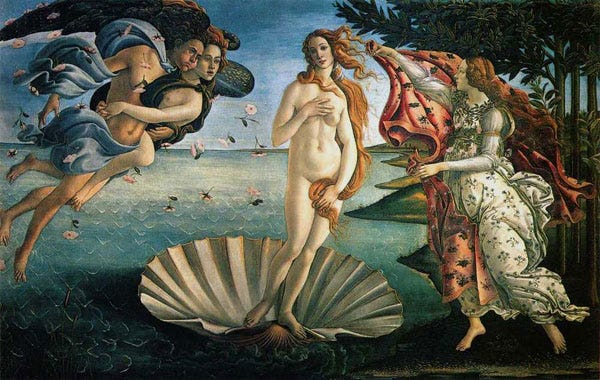
And then she’s again in The Spring painting that Botticelli did, and she’s wearing red in that. It’s interestingwhen you start doing all the research, so it was Botticelli’s way of secretly putting Mary Magdalene… connecting her to Venus and sharing her with the masses.
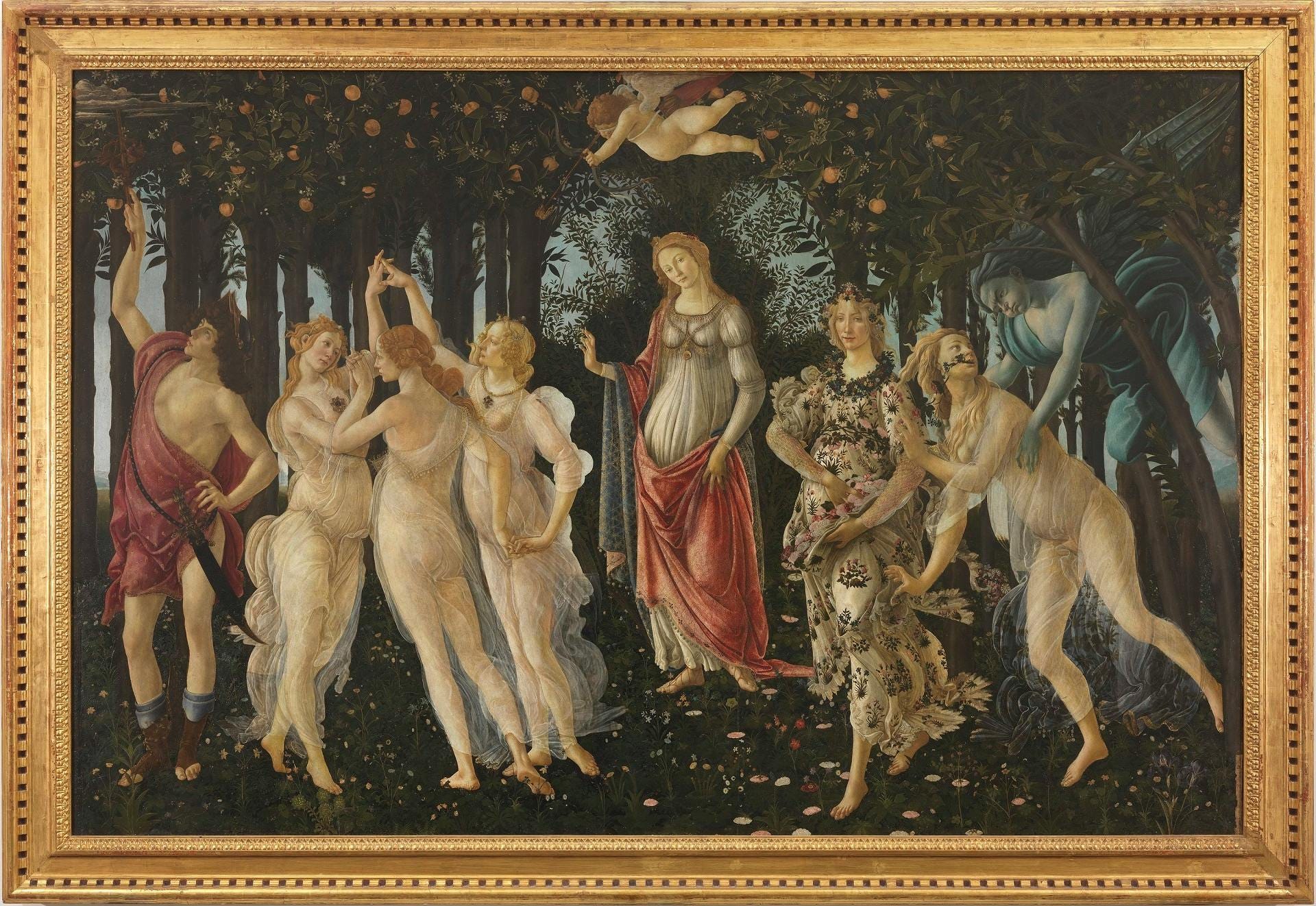
Because it was like blasphemous, because she was ostracized from the church and only now she’s been called the 13th disciple, resurrected again. But I just think that’s interesting — we’re going back to Venus. There’s definitely some incredible connections.
Elyssa: Yes. Oh, beautiful. The water, Venus, the rebirth of Venus…
Shiva: Why we need to stop, we need to limit this AI situation because the waters are not happy about it.
So I don’t know if we need to have more laws, more, you know, and maybe that’s something like we can connect to like Bobby, get the word out to Bobby Kennedy to fight for these to create more strict laws to help us.
Because it’s affecting our environment.
Elyssa: Yeah, that would be amazing. Incredible. Okay. Yes, the water. The water needs us.
Shiva: yes.
Elyssa: Venus has spoken.
Shiva: Mm. Venus has spoken.
Elyssa: Venus has spoken. Okay, we’re, listen, we’re listening.
So Shiva, where can people find you? The Waterways of the Feminine Mystique?
How can they go deeper with you?
Shiva: That’s on my podia, which lives on my Instagram bio… I’m local Rose. And then I’m Shiva Rose Beauty for my skincare line, but Local Rose is the one that’s more personal. And I’ll try to find our Venus article and post it there too.
Elyssa: Yes. And we’ll share your Substack as well!
Shiva:
Yes of course. My Substack is House of Magdalena, which again is connected to my, my Love for Mary Magdalene. And yes, I can’t wait for this as this can be out and we can share it with everybody.
Thank you.
So the moral of this is disconnect from the phone. Go disconnect from AI and find your inner muse.
Elyssa: Yes. Oh, I love it. That’s what that’s the medicine and the message.
Shiva: That’s the medicine. Thank you. Last Unicorn.
Elyssa: Oh, my pleasure. Thank you. Fellow last unicorn. We won’t use Chat GPT.
Shiva: We refuse. We boycott.
Elyssa: You can join us. You’re invited. Yes. You’re listening. You can join our club. Be a unicorn. Okay.
Shiva: Thank you.
Elyssa: Thanks so much.
🦄🦄🦄


